

Fun damental approaches involve breaking down complex ideas, skills, and systems into their simplest core building blocks while keeping the learning process engaging and enjoyable. Mastering these foundational elements allows individuals to build stronger habits, solve tough problems, and achieve sustainable long-term progress across any field.
Have you ever tried building a massive tower without taking time to lay down a solid base first? Focusing on a fun damental approach to learning ensures that your foundational skills stay rock solid while keeping your curiosity alive.
You do not need to struggle through dry textbooks or overwhelming manuals to master complicated subjects step-by-step. Let us explore how making core principles enjoyable changes how you absorb new information.
Whether you want to learn a new language, improve a sport, or master creative coding, keeping things fun and fun damental keeps you motivated. You will find practical steps waiting for you right here.
Get ready to discover actionable learning techniques, mental models, and daily habits designed to make fun damental mastery your absolute favorite way to grow.
Why Core Building Blocks Matter for Long-Term Growth

Breaking Complex Concepts Into Simple Steps
Every advanced skill is just a collection of very simple ideas stacked on top of one another. When you separate a daunting challenge into its smallest parts, mastering each piece becomes surprisingly easy and enjoyable.
Building Lasting Confidence Through Strong Foundations
Rushing ahead to advanced techniques without solid basics often leads to frustration and sudden plateaus. Taking time to cement core skills gives you unwavering confidence when tackling unpredictable real-world challenges.
- Focus on single core mechanics before combining techniques
- Celebrate minor daily improvements to build momentum
- Revisit basic principles whenever you feel stuck on complex tasks
Making Learning Enjoyable and Sustainable

Turning Practice Sessions Into Playful Games
Repetition can feel boring if you treat it like a tedious chore rather than an interactive game. Turning skill drills into short timed challenges or playful experiments keeps your brain fully engaged.
The Psychology of Curiosity and Habit Loops
Your brain naturally retains information much better when you approach new topics with genuine playfulness and curiosity. Designing reward systems around your practice sessions builds strong habits that last for years.
- Set micro-goals that take less than five minutes to complete
- Track your progress visually using simple daily habit trackers
- Reward yourself after completing foundational practice drills
Step-by-Step Guide to Mastering Any New Skill
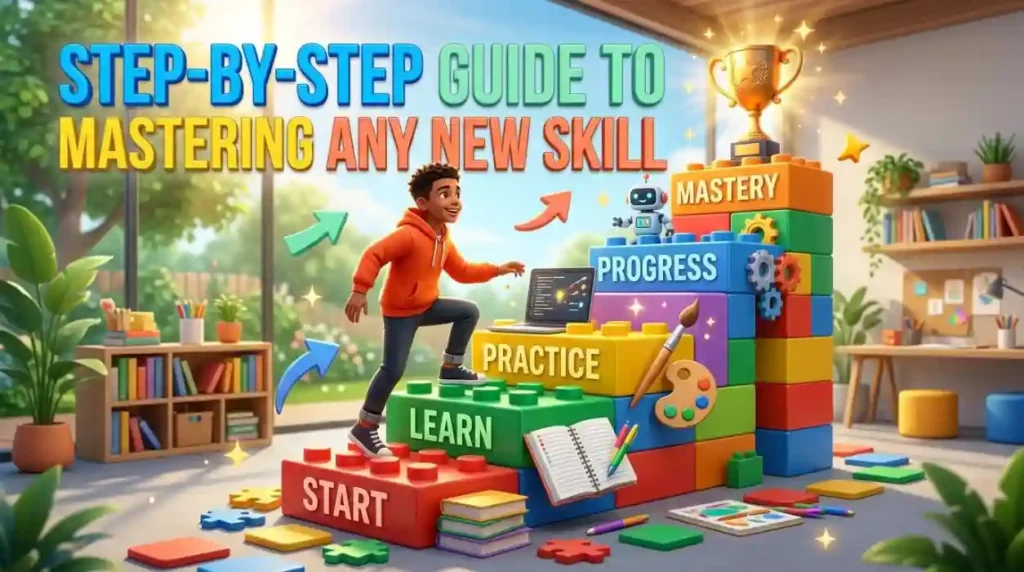
Identifying the True Core Essentials
Before spending hours studying, identify the vital few principles that drive most of the results. Focusing your early energy on these high-impact basics accelerates your overall learning curve dramatically.
Applying Active Recall and Spaced Repetition
Passively reading notes rarely creates lasting memory connections inside your mind. Testing yourself regularly and spacing out review sessions solidifies foundational knowledge far better than cramming.
- Pick one foundational skill to focus on each week
- Practice the basic mechanic in short, focused ten-minute blocks
- Test your understanding without looking at reference guides
Overcoming Plateaus by Returning to Basics

Spotting Hidden Flaws in Advanced Work
When progress stalls in any creative or technical field, the root cause almost always traces back to an overlooked basic step. Stripping away extra complexity lets you fix small core errors quickly.
Rebuilding Habits With Fresh Energy
Taking a step back to refine your primary skills is never a step backward in your journey. Refining your core approach provides the springboard needed to leap past previous skill ceilings.
- Audit your daily workflow to identify where friction occurs
- Practice fundamental drills slowly to rebuild muscle memory
- Simplify your toolkit so you can focus on pure execution
Practical Examples Across Different Creative Fields

Foundation Building in Music and Arts
Musicians practice simple scales and rhythms daily because perfect timing elevates even the simplest melodies. Artists spend years sketching basic shapes and studying light values to make complex paintings feel realistic.
Core Mastery in Athletics and Gaming
Professional athletes dedicate hours to basic footwork and conditioning rather than flashy trick plays. Gamers who master simple positioning and map awareness consistently outperform players with quick reflexes alone.
- Guitarists practicing clean chord transitions over fast solos
- Basketball players perfecting simple free throws and chest passes
- Programmers writing clean, basic functions before building large apps
Measuring Progress Without Overwhelming Yourself

Keeping Simple Diagnostic Logs
Tracking your daily practice using basic metrics gives you clear evidence of your steady growth. Reviewing old logs shows how far you have come and reinforces your commitment to fundamental practice.
Seeking Constructive Feedback Early
Sharing your early foundational work with mentors helps you catch bad habits before they become deeply ingrained. Constructive guidance keeps your practice efficient and aligned with your long-term goals.
Practice Exercise
- What is the main advantage of breaking complex skills into smaller core parts?
A. It makes learning feel less overwhelming and easier to master step-by-step
B. It guarantees you will never need to practice again
C. It allows you to skip all basic concepts entirely
D. It increases the financial cost of learning resources - Why do professional athletes continue practicing simple foundational drills?
A. Because they are forbidden from learning advanced strategies
B. Because strong core mechanics form the foundation of consistent performance
C. To waste time during team training sessions
D. Because basic drills require zero physical exertion - How does active recall improve memory retention compared to passive reading?
A. It forces your brain to retrieve information, strengthening neural pathways
B. It takes less than one second to complete
C. It eliminates the need for sleeping at night
D. It automatically translates concepts into foreign languages - What should you examine first when hitting a sudden performance plateau?
A. Buy brand new expensive equipment immediately
B. Give up on the skill completely and pick a new hobby
C. Revisit your basic core habits to spot hidden foundational errors
D. Double the speed of your practice drills without stopping - What is the benefit of setting micro-goals during practice sessions?
A. Micro-goals build steady momentum without causing mental overwhelm
B. Micro-goals force you to practice for ten hours straight
C. Micro-goals make tracking progress impossible
D. Micro-goals eliminate the need for curiosity
Answer Key:
1. A
2. B
3. A
4. C
5. A
Frequently Asked Questions
Why are basic principles so important for beginners?
Basic principles create the necessary mental framework required to understand complex topics later. Without a solid understanding of core mechanics, advanced concepts feel confusing and difficult to apply consistently.
How much time should I spend on fundamental practice daily?
Spending just fifteen to thirty minutes on focused core practice every day yields amazing results over time. Consistency matters far more than burning yourself out during long, irregular study sessions.
How do I know if I have mastered the basics?
You have mastered the basics when you can perform core actions smoothly without needing to stop and think. Being able to explain simple concepts clearly to someone else is another great test.
Is it normal to feel bored during repetitive practice?
Feeling occasionally bored during basic drills is completely natural for learners of all levels. Gamifying your practice routines and tracking small wins helps maintain high energy and curiosity.
Can experienced professionals benefit from reviewing core concepts?
Experienced professionals regularly revisit fundamental skills to refine their technique and catch subtle mistakes. Returning to basics sharpens instincts and clears away unnecessary complexity in advanced work.
How do I avoid bad habits during early practice?
Practicing slowly and focusing on clean execution prevents bad habits from forming early on. Seeking early feedback from experienced mentors or recording your practice sessions also helps identify errors.
Conclusion
Mastering complex subjects becomes an exciting journey when you focus on building strong core habits step-by-step. By breaking down big challenges, staying curious, and practicing basic mechanics daily, you set yourself up for sustainable long-term success.
Whether you are picking up a new hobby or sharpening professional skills, keeping things light and structured makes all the difference. For more helpful learning frameworks and expert guides, explore our favorite fun damental resources.
Pick one basic skill today, start practicing with a fresh perspective, and enjoy watching your confidence grow!

Rose Amili is the writer behind LaughSphere.com, a website where learning meets curiosity and fun. She enjoys exploring fascinating facts, surprising stories, science, history, nature, weather, and many other interesting subjects. Her writing style is simple, friendly, and easy to understand, making information enjoyable for readers of all backgrounds.
Through LaughSphere.com, Rose Amili hopes to spark curiosity and encourage readers to discover something new every day. She believes even an ordinary topic can become interesting when it is shared from a fresh and engaging perspective. Her goal is to create useful, enjoyable content that readers can understand easily, remember, and share with others.