

Fun curse words are playful, family-friendly exclamations, vintage slang, and creative minced oaths like “fiddlesticks,” “gadzooks,” and “barnacles” used to vent sudden frustration without offending anyone. By swapping harsh profanity for silly, rhythmic alternatives, speakers release emotional tension while turning stubbed toes and spilled coffee into shared laughs.
Have you ever stubbed your pinky toe on a wooden coffee table while standing right next to your grandmother or a room full of toddlers? Reaching for fun curse words lets you vent sudden pain or frustration loudly without making anyone blush.
You do not need harsh profanity to express genuine shock, annoyance, or disbelief when life throws a curveball. Let us look at how creative wordplay and vintage exclamations relieve stress while sparking instant laughs.
Whether you are dropping a stack of papers at work or losing a close board game, using fun curse words keeps the mood lighthearted. You will find hilarious minced oaths and nautical yells waiting right here.
Get ready to discover silly food exclamations, Shakespearean insults, and sci-fi catchphrases engineered to make fun curse words your favorite stress-relief habit.
Why Playful Exclamations Beat Harsh Profanity

The Science of Venting Frustration Out Loud
Psychologists have long observed that shouting a sharp, rhythmic exclamation when you drop a heavy pan actually helps your brain process sudden pain or stress. Using a silly, unexpected word delivers that same emotional release while turning an annoying accident into immediate comedy.
Keeping Conversations Family-Friendly and Workplace-Safe
Modern life puts us around kids, coworkers, clients, and older relatives where harsh language simply does not fit. Having a mental pocketful of goofy substitute phrases lets you express strong feelings freely in classrooms, offices, and family dinner tables.
- Turning clumsy mistakes into lighthearted icebreakers around friends
- Protecting young ears while still reacting honestly when things go wrong
- Showing verbal creativity instead of repeating the same tired four-letter words
How Minced Oaths Evolved Over Centuries
Linguists call polite or humorous replacements for taboo expressions “minced oaths.” Centuries ago, people softened strong phrases into harmless rhymes like “gosh darn,” “crikey,” and “jiminy crickets,” creating a rich tradition of playful English wordplay that continues today.
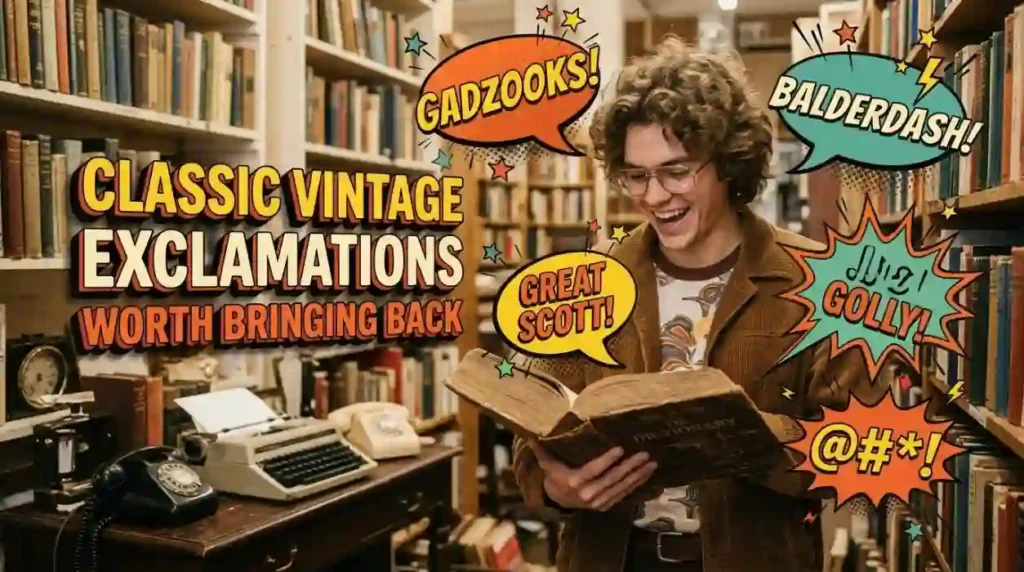
Classic Vintage Exclamations Worth Bringing Back
Old-Fashioned Favorites From Bygone Eras
Older generations had an extraordinary talent for inventing dramatic, bouncy exclamations that roll off the tongue. Words like “fiddlesticks,” “hogwash,” “balderdash,” and “poppycock” sound wonderfully theatrical when shouted after spilling morning orange juice.
Dramatic Victorian and Shakespearean Outbursts
If you want your frustration to sound like a grand stage performance, borrow dramatic flair from classic theater. Shouting “Zounds!”, “Gadzooks!”, or “By Jove!” transforms a minor traffic jam into an epic historical comedy scene.
- Start with a sharp, punchy consonant sound like B, F, or G for maximum vocal impact
- Stretch out the middle syllables dramatically to let out built-up tension
- Pair your exclamation with an exaggerated theatrical sigh or raised eyebrow
- Watch nearby friends burst out laughing instead of feeling tense
Nautical Sailor Slang and Pirate Yells
- Shouting “Shiver me timbers!” or “Blistering barnacles!” when unexpected rain ruins a picnic
- Using “Great Neptune’s beard!” or “Jumpin’ jellyfish!” for ocean-themed comedy
- Saying “Son of a biscuit eater!” when a video game boss defeats you at the last second
Delicious Food-Inspired Outbursts for Everyday Mishaps

Sweet Treats and Breakfast Exclamations
There is something inherently hilarious about yelling the name of an innocent dessert or breakfast pastry when you drop your keys. Phrases like “Oh, sugar!”, “Sweet sassy molassy!”, “Fudge nuggets!”, and “Holy guacamole!” soften angry moods instantly.
Savory Snacks and Kitchen Nonsense
When dinner burns in the oven, or your shoelace snaps right before a meeting, food combinations save the day. Try exclaiming “Cheese and crackers!” “Son of a nutcracker!”, or “Great Caesar’s ghost!” to keep everyone smiling.
- “Aw, tartar sauce!” for minor everyday inconveniences and lost pencils
- “Mother of pearl!” or “Sweet pickled peppers!” when hearing shocking gossip
- “Criminy!” and “Dagnammit!” for classic, down-home porch-swing charm
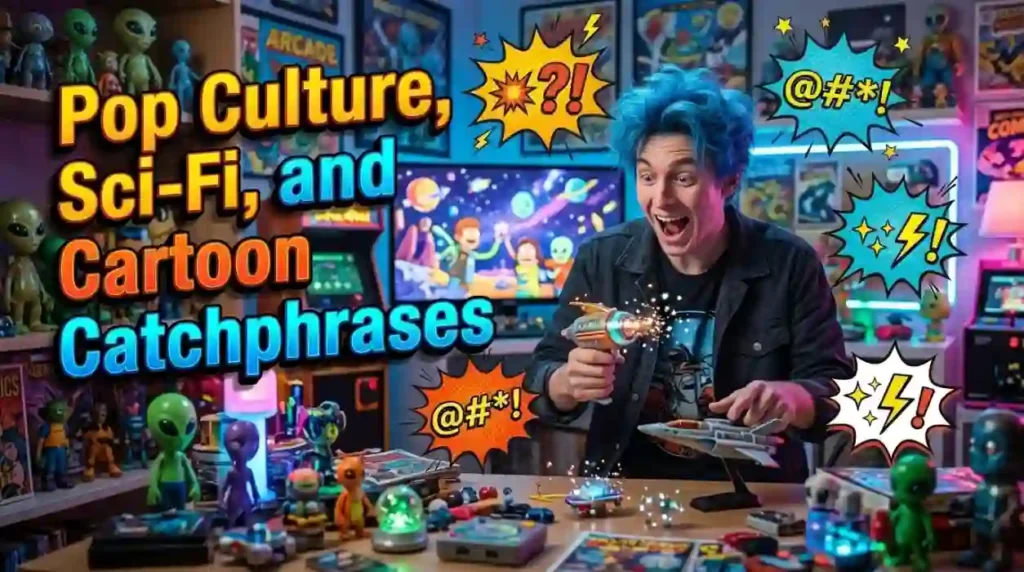
Pop Culture, Sci-Fi, and Cartoon Catchphrases
Space-Age and Fantasy Curse Replacements
Science fiction and fantasy writers frequently invent fictional exclamations so characters sound authentic to their imaginary worlds without tripping broadcast censors. Fans love borrowing phrases like “Frak!”, “Shiny!”, “Great Scott!”, and “By Grabthar’s hammer!” in real life.
Beloved Animated Show Outbursts
Cartoons have given us some of the cleanest, most memorable frustration yells ever broadcast. From SpongeBob’s classic “Barnacles!” and “Fish paste!” to Scooby-Doo’s “Ruh-roh!” and Charlie Brown’s “Good grief!”, animated catchphrases work for every generation.
- Saying “D’oh!” when realizing you left your house keys inside on the kitchen counter
- Yelling “Galloping gargoyles!” or “Suffering succotash!” during chaotic board game nights
- Using “Merlin’s beard!” whenever someone pulls off an unbelievable lucky shot
Inventing Your Own Signature Catchphrase
- Combine an unexpected adjective like “jumping” or “flaming” with a harmless animal like “platypus” or “aardvark”
- Test alliterative pairs such as “bouncing baboons” or “galloping grasshoppers”
- Pick one signature phrase so friends immediately recognize your personal style
Knowing When and Where to Use Playful Language

Reading the Room in Professional Settings
Even harmless, silly exclamations work best when matched to the social setting around you. Dropping a cheerful “Oh, fiddlesticks!” during a casual team brainstorming session lightens the mood, whereas formal client presentations still call for calm composure.
Teaching Kids Creative Ways to Express Big Feelings
Children naturally mimic the reactions adults model when things go wrong. Teaching kids that they can yell “Bananas!” or “Snickerdoodles!” when a block tower collapses gives them a healthy, hilarious outlet for big emotions.
Practice Exercise
- What do linguists call polite or humorous substitute words used in place of harsh profanity?
A. Silent vowels
B. Minced oaths
C. Formal nouns
D. Compound verbs - Why does shouting a playful exclamation out loud help when you stub your toe?
A. It instantly heals broken bones in two seconds
B. It releases sudden emotional tension and stress while turning pain into humor
C. It lowers the room temperature by fifteen degrees
D. It prevents gravity from working on falling objects - Which of the following is an example of a classic food-inspired exclamation?
A. “Blistering barnacles!”
B. “Cheese and crackers!”
C. “Great Scott!”
D. “Shiver me timbers!” - How can you easily invent your own original family-friendly exclamation?
A. Combine a bouncy adjective with a harmless animal, like “jumping jellyfish”
B. Read an entire medical dictionary backward out loud
C. Whisper silent numbers under your breath for ten minutes
D. Copy legal fine print from insurance contracts - Why is teaching kids playful substitute phrases helpful when they feel frustrated?|
A. It stops them from ever feeling upset about anything
B. It gives them a safe, humorous outlet to express big feelings without using offensive words
C. It replaces the need to learn basic reading skills
D. It guarantees they will win every board game they play
Answer Key:
1. B
2. B
3. B
4. A
5. B
FAQs
Where did the word “fiddlesticks” originally come from?
“Fiddlesticks” dates back to the early seventeenth century in England, originally referring simply to the wooden bow used to play a fiddle. Over time, speakers began using it playfully to dismiss nonsense or express mild annoyance without swearing.
Why do food words sound so funny when used as exclamations?
Food words like “guacamole,” “nuggets,” and “biscuit” feature bouncy syllables and cheerful everyday associations that clash sharply with sudden anger. That unexpected contrast surprises listeners’ brains and triggers instant laughter.
Can using silly substitute words really reduce anger?
Yes, shifting your vocabulary from harsh anger to playful absurdity interrupts the brain’s stress spiral. When you hear yourself yell “sweet pickled peppers,” it is nearly impossible to stay furious for long.
What are some great clean exclamations for teachers to use in classrooms?
Teachers love using phrases like “Oh, sugar snaps!” “Goodness gracious!”, “Jiminy crickets!”, and “Oh, bananas!” These upbeat expressions keep classroom energy positive, model emotional self-control, and make students smile during small hiccups.
Are vintage exclamations like “gadzooks” still understood today?
Even if listeners do not know the exact historical origin of “gadzooks,” which evolved from “God’s hooks,” its dramatic sound makes the emotional meaning crystal clear. Vintage words carry built-in theatrical charm that modern audiences still enjoy.
How can I break the habit of using harsh profanity around family?
Pick two or three favorite playful substitutes ahead of time and practice saying them out loud whenever minor annoyances happen alone at home. Building muscle memory with funny replacements makes switching effortless when company is around.
Conclusion
Swapping harsh profanity for creative, lighthearted exclamations proves that venting frustration can bring people together instead of creating awkwardness. Whether you shout “blistering barnacles” after dropping your keys, whisper “good grief” during a slow commute, or yell “cheese and crackers” when a recipe goes sideways, playful language turns small disasters into shared smiles.
Keeping a few favorite vintage yells and food-inspired catchphrases ready lets you express genuine emotion anywhere while keeping the mood upbeat. For more entertaining wordplay, trivia, and lighthearted language guides, explore our complete collection of fun curse words today.
Pick your favorite silly exclamation from this list, try it out the next time you stub your toe, and enjoy turning everyday frustration into instant laughter!

Rose Amili is the writer behind LaughSphere.com, a website where learning meets curiosity and fun. She enjoys exploring fascinating facts, surprising stories, science, history, nature, weather, and many other interesting subjects. Her writing style is simple, friendly, and easy to understand, making information enjoyable for readers of all backgrounds.
Through LaughSphere.com, Rose Amili hopes to spark curiosity and encourage readers to discover something new every day. She believes even an ordinary topic can become interesting when it is shared from a fresh and engaging perspective. Her goal is to create useful, enjoyable content that readers can understand easily, remember, and share with others.