

Fun cheer routines are lively, rhythmic chants, claps, and call-and-response yells designed to boost crowd energy and build team spirit. Used at youth sports games, summer camps, and pep rallies, these easy-to-follow cheers unite participants, encourage athletes, and turn quiet sidelines into vibrant celebrations.
Have you ever sat in quiet stadium bleachers watching a close game where nobody knew how to get the crowd excited? Leading a lively, fun cheer instantly turns shy spectators into a roaring wave of support.
You do not need professional tumbling skills or shiny megaphones to get people clapping and shouting together. Let us look at how simple rhythms and catchy rhymes bring groups alive.
Whether you are coaching youth soccer, leading summer camp songs, or rallying office coworkers, mastering a fun cheer creates instant unity. You will find ready-to-use chants and rhythm tips waiting right here.
Get ready to discover call-and-response yells, stomp-clap beats, and creative spirit games engineered to make every fun cheer unforgettable.
Why Group Chants and Spirit Yells Build Instant Unity

The Psychology of Synchronized Clapping and Chanting
When a crowd claps, stomps, and shouts words together in rhythm, human brains release oxytocin and endorphins. This shared physical pulse breaks down social barriers between strangers, turning a scattered audience into one supportive community.
Lifting Athlete Morale During Tough Games
Players on the field or court feel a genuine surge of adrenaline when they hear supporters chanting their team name. Even during a losing streak, positive sideline energy reminds athletes that their community stands behind them.
- Turning nervous pre-game jitters into confident, upbeat excitement
- Giving young kids a structured, positive way to channel loud energy
- Creating cherished seasonal traditions that families remember for years
Classic Call-and-Response Cheers Anyone Can Lead
The Echo Technique for Large Crowds
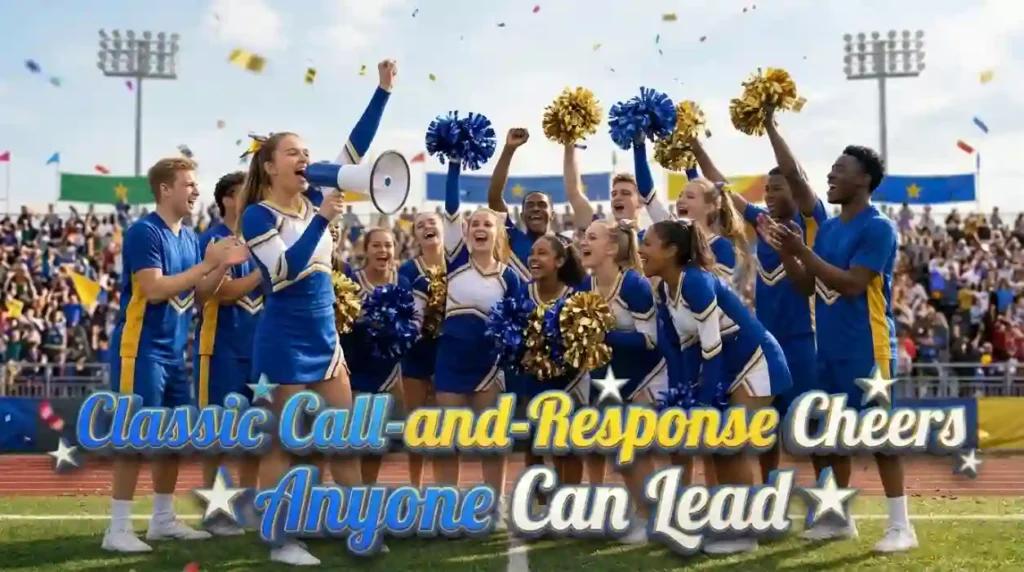
Call-and-response cheers work brilliantly because the audience does not need to memorize long verses ahead of time. One leader shouts a short, punchy phrase, and the crowd echoes the exact words back at double volume.
High-Energy Question and Answer Chants
Asking the crowd a simple question like “Who rocks the house?” invites an immediate, thunderous reply. Keeping the response words short and punchy ensures everyone stays synchronized without stumbling over syllables.
- Step forward so everyone in the bleachers or circle can see your hands clearly
- Cup your hands around your mouth or raise your arms high to signal the start
- Shout the opening line slowly and clearly with big facial enthusiasm
- Point both hands toward the crowd on the beat so they know exactly when to answer
Easy Call-and-Response Examples
- Leader: “Give me a G-O!” Crowd: “G-O! Let’s go, team, go!”
- Leader: “Are you ready?” Crowd: “Born ready! Let’s win this!”
- Leader: “Red and white!” Crowd: “Dynamite! Fight, fight, fight!”
Stomp-Clap Rhythms and Percussion Chants

Building Beats Without Musical Instruments
You do not need a marching band to create stadium-shaking percussion; feet on wooden bleachers and clapping hands work wonders. Combining two heavy foot stomps with one sharp clap creates an irresistible heartbeat that pulls nearby fans in automatically.
Progressive Volume Builders (The Rollercoaster Cheer)
Volume-building chants start at a barely audible whisper while everyone crouches down low. With each repeated line, participants rise higher and shout louder until the entire group jumps up at maximum volume.
- Stomp-stomp-clap beats modeled after classic stadium rock anthems
- Knee-slap and hand-clap patterns that keep young kids focused on coordination
- Whisper-to-roar countdowns that build hilarious suspense before kickoff
Creative Campfire and Youth Sports Spirit Ideas
Silly Motion Chants for Younger Kids
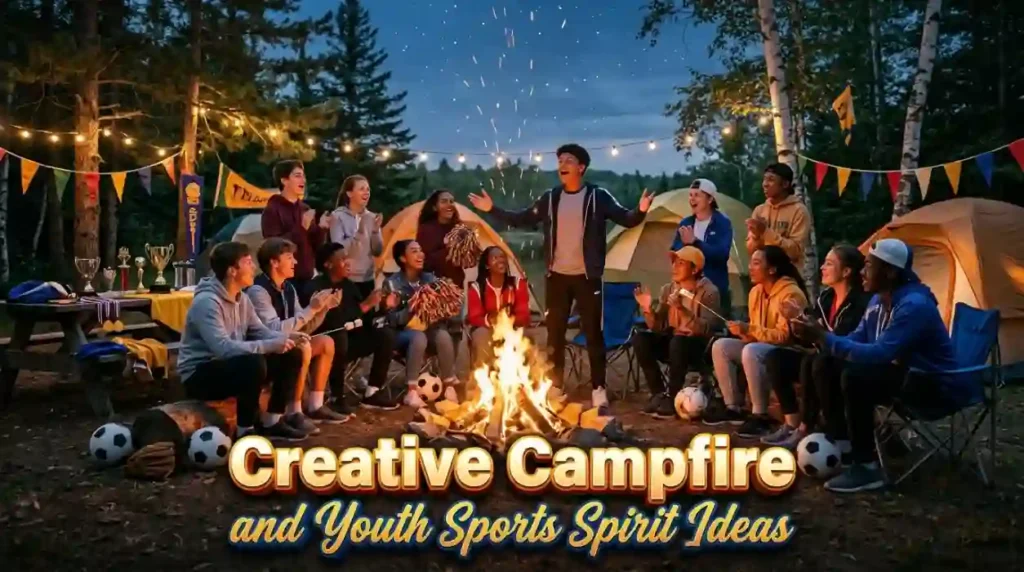
Younger children love chants paired with funny physical actions like wiggling fingers, spinning around, or mimicking animals. Adding big arm waves and silly jumps keeps little ones engaged even during long halftime breaks.
Positive Sportsmanship Cheers for Opponents
Teaching kids to cheer respectfully for opposing teams after a match builds wonderful character and grace. A quick, friendly chant thanking the other team for a great game leaves everyone smiling at the final whistle.
- “Two, four, six, eight, who do we appreciate?” followed by the opponent’s name
- Doing “The Wave” around circular campfires or long stadium bleachers
- Spelling out the team mascot name using big arm letters like a YMCA dance
Keeping Sideline Spirit Positive and Safe
- Never use chants that insult referees, opposing players, or visiting parents
- Keep sideline routines clear of running tracks and active playing boundaries
- Encourage shy participants gently without forcing anyone into the spotlight
How to Invent Your Own Original Team Cheer
Using Team Colors, Mascots, and Rhyming Words
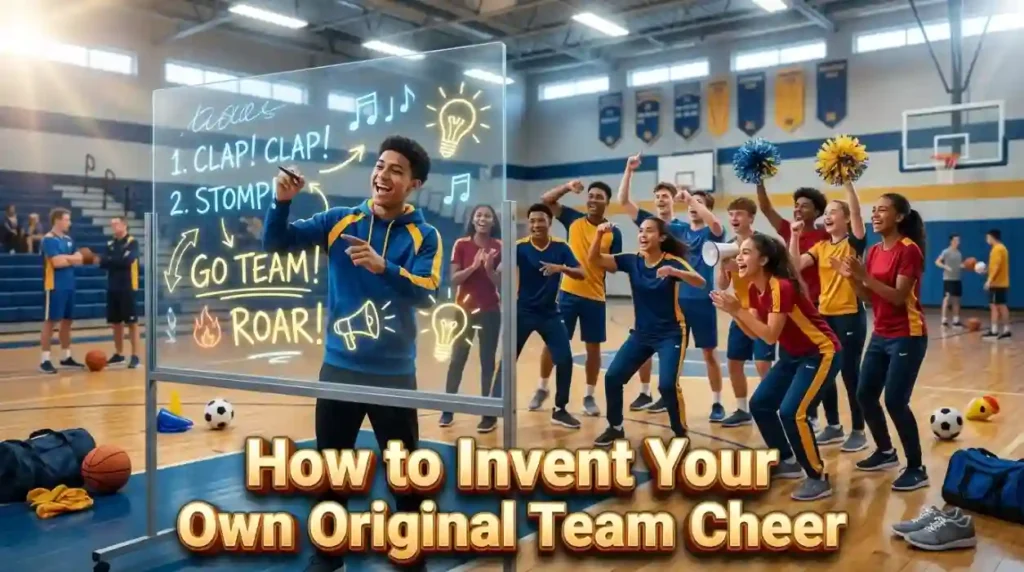
Start brainstorming by writing down your team name, jersey colors, and mascot traits on a scrap of paper. Pair strong action verbs like “roar,” “soar,” or “shine” with simple rhyming words to craft a four-line chant.
Testing Rhythm and Pacing Before Game Day
Say your new chant out loud while clapping a steady four-beat rhythm to check if any words feel clunky. Trimming extra syllables makes the chant snappy, loud, and effortless for a crowd to shout together.
Practice Exercise
- What happens in human brains when a crowd claps and chants together in rhythm?
A. Everyone immediately falls asleep in the bleachers
B. Brains release oxytocin and endorphins, building instant group unity
C. People forget the rules of the sport they are watching
D. Hearing abilities shut down permanently for two hours - Why are call-and-response cheers ideal for crowds that have never practiced together?
A. Because the crowd only needs to echo short phrases shouted by a leader
B. Because nobody in the crowd is allowed to make any noise
C. Because printed lyric booklets are mailed to fans weeks ahead
D. Because call-and-response chants use silent sign language only - How does a progressive volume-building cheer (like the Rollercoaster) work?
A. Everyone starts shouting and ends in complete silence
B. Participants start crouching in a whisper and rise to a roar
C. Fans run laps around the stadium while singing opera
D. Only the team coach is permitted to clap during the chant - What is a helpful tip when writing an original four-line chant for your team?
A. Combine team colors, mascot names, and short action rhymes
B. Use complicated scientific words that nobody can pronounce
C. Make the chant twenty minutes long with zero pauses
D. Copy dictionary definitions word-for-word onto posters - Why should sports teams perform positive sportsmanship cheers after a game?
A. To confuse the referees about who won the trophy
B. To show respect for opponents and build positive character in young athletes
C. To delay leaving the stadium until midnight
D. To earn extra penalty points on the scoreboard
Answer Key:
1. B
2. A
3. B
4. A
5. B
FAQs
How do I get a shy crowd to join in on a chant?
Start with an easy, familiar stomp-clap rhythm before introducing any words. People feel much safer clapping along with a beat first, and once the rhythm catches on, they naturally join the vocal chant.
What makes a cheer catchy and easy to remember?
Short lines, strong end rhymes, and a steady four-beat rhythm make chants stick effortlessly in people’s minds. Repeating the core team name or slogan twice reinforces the phrase so newcomers catch on immediately.
Can fun cheer activities work for adult office team-building?
Lighthearted call-and-response chants and rhythmic clap games work wonderfully as quick icebreakers at company retreats. Keeping the tone playful and self-aware helps adults laugh together and shake off workplace stiffness.
How loud should a cheerleader project their voice?
Project your voice from your diaphragm rather than straining your throat, speaking slightly slower than normal conversation speed. Clear enunciation carries much farther across noisy gyms and outdoor fields than high-pitched screaming.
Are there fun cheers that do not require standing up?
Hand-clapping patterns, knee-slapping beats, and seated wave motions let everyone participate comfortably from bleachers or chairs. Seated percussion cheers work especially well in tight indoor spaces or inclusive group settings.
How can we keep chants fresh throughout a long sports season?
Rotate three or four signature chants each game and introduce one new spirit yell for playoff matches or championships. Letting different team captains or young fans lead their favorite chant keeps excitement high all season.
Conclusion
Bringing energy, rhythm, and positive spirit to any gathering is one of the easiest ways to turn ordinary moments into unforgettable memories. Whether you are leading a stadium stomp-clap beat, guiding young athletes through silly motion rhymes, or thanking opponents with good sportsmanship, shared enthusiasm unites everyone in the room.
Do not worry about having a perfect singing voice; genuine excitement and a big smile are all you need to inspire a crowd. For more spirit ideas, group games, and creative crowd activities, explore our favorite fun cheer collection.
Step up, start a steady clap today, and watch how quickly your energy lights up the entire crowd!

Rose Amili is the writer behind LaughSphere.com, a website where learning meets curiosity and fun. She enjoys exploring fascinating facts, surprising stories, science, history, nature, weather, and many other interesting subjects. Her writing style is simple, friendly, and easy to understand, making information enjoyable for readers of all backgrounds.
Through LaughSphere.com, Rose Amili hopes to spark curiosity and encourage readers to discover something new every day. She believes even an ordinary topic can become interesting when it is shared from a fresh and engaging perspective. Her goal is to create useful, enjoyable content that readers can understand easily, remember, and share with others.