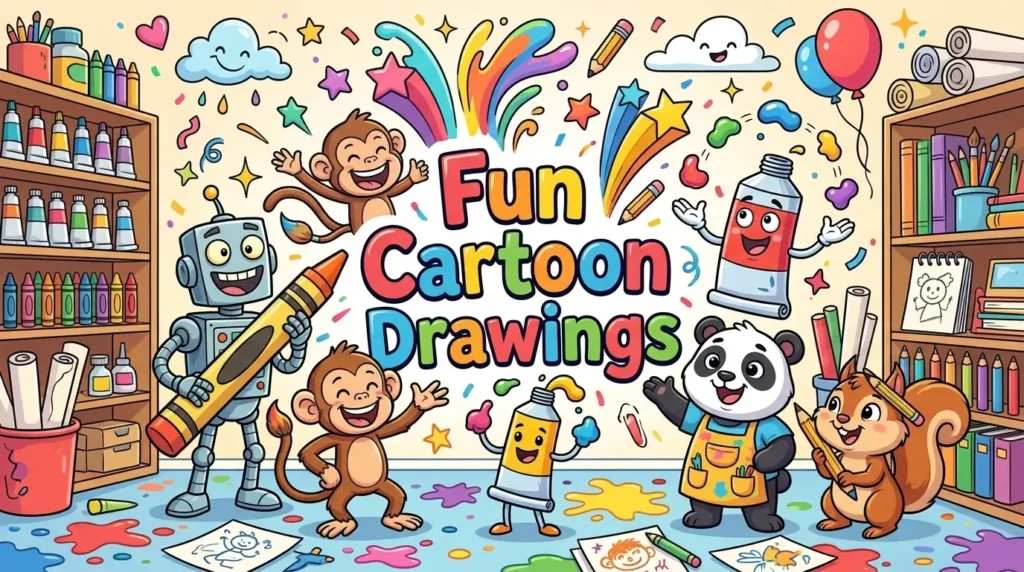
Fun cartoon drawings include expressive animal characters, quirky comic objects, and stylized human sketches, offering beginners and casual artists an easy way to build sketching confidence, express personal creativity, and enjoy relaxing moments filled with artistic laughter.
Have you ever doodled a simple smiley face on a notepad and wished you could sketch entire characters with ease? Turning playful ideas into colorful illustrations can be a relaxing and rewarding hobby for beginners, artists, and anyone who enjoys creative expression.
Exploring fun cartoon drawings makes it easier to bring imaginative characters and humorous scenes to life. With simple shapes, expressive faces, and creative details, you can develop your drawing skills while enjoying every step of the artistic process.
Practicing fun cartoon drawings can also boost confidence and encourage you to experiment with different styles. Whether you prefer cute animals, funny characters, or imaginative scenes, each sketch offers a new opportunity to learn and create something unique.
Discovering fun cartoon drawings can make your next sketching session more exciting and enjoyable. Let us explore creative ideas, simple techniques, and playful inspiration to help turn your blank page into a lively work of art.
Why Cartoon Sketching Brings Instant Joy

Creating art does not have to involve stressful proportions, complex shading, or expensive professional studios. Simple sketching allows you to capture humor and personality with just a few confident pencil strokes. When you focus on fun cartoon drawings, the primary goal is making yourself and others smile.
Relieving Daily Stress Through Creativity
Pacing your hand across paper helps quiet a busy mind after a long day of responsibilities. Doodling silly faces or clumsy animals shifts your focus away from daily worries. Art becomes a comforting sanctuary for your thoughts.
Embracing Imperfections Proudly
Cartoons thrive on exaggeration, uneven lines, and quirky anatomical proportions that would look wrong in realistic portraits. A crooked nose or oversized eyes only adds charm to your character. Mistakes become unique artistic features.
Simple Character Concepts for Absolute Beginners

Starting your artistic journey with overly complex designs can lead to frustration and premature burnout. Beginning with basic geometric shapes like circles, squares, and triangles makes sketching effortless. Every great cartoon starts with simple foundational outlines.
Building Characters from Basic Circles
Drawing a simple circle serves as the perfect base for expressive human heads and furry animal faces. Adding intersecting guidelines helps you place eyes, noses, and smiles accurately. Construction lines give your sketches immediate balance.
Adding Dynamic Facial Expressions
Eyes and eyebrows carry the emotional weight of any cartoon character you create. Raising an eyebrow or curving a mouth downward instantly changes a cheerful sketch into a grumpy persona. Experimenting with expressions teaches you how lines communicate emotion.
- Sketching wide circles for surprised cartoon eyes
- Drawing arched lines to represent happy, smiling mouths
- Adding floppy ears to simple oval animal heads
- Creating oversized shoes for silly walking characters
Fun Cartoon Ideas to Draw for Beginners
If you are wondering what you should draw in cartoon style, start with subjects that are simple, funny, and easy to personalize. A sleepy cat, smiling puppy, silly monster, dancing banana, surprised cupcake, goofy robot, or happy cloud can become an entertaining sketch with just a few basic shapes. These fun cartoons to draw are perfect for beginners because they do not require complicated details.
Easy and Funny Cartoon Characters
Try drawing a character with an oversized head, tiny body, huge shoes, or exaggerated eyes. A confused detective, clumsy superhero, sleepy student, dancing chef, or grumpy little alien can make an excellent beginner sketch. These easy funny cartoons to draw allow you to practice body shapes, expressions, and humorous poses without worrying about realistic proportions.
Cool Cartoon Things to Draw
Everyday objects can become entertaining characters when you add faces, arms, legs, or exaggerated expressions. Try a laughing coffee mug, nervous alarm clock, dancing pencil, superhero backpack, smiling slice of pizza, or angry smartphone. These cool things to draw cartoon drawing ideas turn ordinary items into playful illustrations and give you plenty of subjects for your sketchbook.
Funny Expressions and Character Illustrations
Facial expressions can make simple cartoon character illustrations much more entertaining. Draw the same character feeling excited, confused, shocked, sleepy, angry, or delighted by changing only the eyes, eyebrows, and mouth. This exercise creates useful funny cartoon facial expressions while teaching you how small changes can communicate different emotions.
Simple Cartoon Drawing Topics for Your Sketchbook
Keep your sketchbook interesting by rotating between different cartoon drawing topics. You could draw cute animals one day, funny food characters the next, followed by silly monsters, imaginative vehicles, expressive people, fantasy creatures, or personified household objects. Having different subjects prevents repetitive practice and gives you more opportunities to discover your favorite style.
How Minimalist Cartoons Create Humor
Minimalist cartoons often use only a few lines, basic shapes, and exaggerated features to communicate an idea quickly. Instead of drawing every realistic detail, an artist may enlarge a character’s eyes, simplify the body, or give an ordinary object an unexpected expression. The contrast between a simple drawing and an exaggerated situation can create complex humor without requiring a complicated illustration.
If you are looking for fun cartoon drawing practice, choose one simple idea each day and change its expression, pose, or personality. This approach keeps sketching playful while steadily improving your confidence and creativity.
Quirky Animals and Everyday Objects

Once you feel comfortable sketching basic faces, expanding into quirky animals and inanimate objects adds immense variety. Giving ordinary household items like coffee mugs or alarm clocks cute arms and smiling faces is endlessly entertaining.
Anthropomorphic Animals with Attitude
Transforming ordinary pets into human-like characters opens up a playground for creative storytelling. Imagine a lazy cat wearing tiny reading glasses or a puppy skateboarding down a sidewalk. Animal cartoons connect instantly with viewers.
Bringing Inanimate Objects to Life
Drawing a slice of pizza with a cheerful grin or a pencil wearing a tiny top hat sparks immediate joy. Personifying everyday items challenges you to find humor in your immediate surroundings. It turns mundane objects into lovable characters.
Adding Color and Bold Outlines

Moving from a plain pencil sketch to a vibrant finished illustration makes your artwork pop off the page. Bold marker outlines and bright watercolor washes give your drawings a polished, professional comic look. Color breathes life into static paper lines.
Choosing the Right Inking Tools
Using waterproof fineliners or dark markers to trace your pencil lines creates clean, sharp edges. Once the ink dries completely, you can erase any stray pencil marks underneath. Clean lines make illustrations look intentional and crisp.
Experimenting with Bright Color Palettes
Cartoons look best when decorated with saturated primary and secondary colors that catch the eye. Markers, colored pencils, and digital tablets offer endless ways to experiment with shading. Bold hues make your characters memorable.
Smart Tips for Practicing Daily Sketching

Consistency matters far more than raw natural talent when you want to improve your illustration skills. Keeping a small pocket sketchbook and a pen with you everywhere ensures you never miss a moment of inspiration.
Dedicating Ten Minutes a Day
Setting aside just ten minutes daily to doodle builds muscle memory and boosts your confidence. Short, consistent sketching sessions prevent fatigue and keep art feeling like play rather than work. Routine creates lasting progress.
Studying Professional Cartoonists
Looking closely at comic strips, animated films, and graphic novels reveals how professionals simplify complex forms. Notice how few lines they use to convey powerful motion and emotion. Observation accelerates your own learning curve.
Practice Exercise
- What is a primary advantage of practicing cartoon sketching for beginners?
A. It requires no expensive equipment and celebrates imperfections
B. It guarantees a career in professional feature-length animation
C. It eliminates the need for any paper or pencils
D. It replaces the need for sleep and food - Why are geometric shapes useful when starting a character drawing?
A. They serve as simple foundational outlines to build proper balance
B. They make the paper completely waterproof
C. They prevent the pencil from ever breaking
D. They automatically color the drawing for you - What facial features carry the most emotional weight in a cartoon?
A. Eyes and eyebrows
B. The earlobe length
C. The back of the head
D. The collar of the shirt - How do bold ink outlines affect a finished pencil sketch?
A. They create clean, sharp edges and make illustrations pop
B. They dissolve the paper completely
C. They turn the drawing into a three-dimensional sculpture
D. They make the ink change colors over time - What is a smart strategy to improve your illustration skills consistently?
A. Dedicating just ten minutes a day to regular doodling and sketching
B. Waiting twelve months between drawing sessions
C. Only drawing when professional artists are watching you
D. Throwing away every sketch immediately after finishing
Answer Key:
- A
- A
- A
- A
- A
FAQs
Do I need expensive art supplies to create good cartoons?
No, a basic graphite pencil, an eraser, and standard printer paper are all you need to get started. Upgrading to markers or fine-tip pens is fun later, but high-end materials do not replace regular practice and imagination.
How do I overcome the fear of messing up a blank page?
Remind yourself that every single professional artist creates messy sketches and mistakes regularly. Treating early drawings as low-pressure practice experiments removes the anxiety of perfectionism.
Can I learn to draw cartoons if I have zero artistic experience?
Yes, cartooning relies heavily on simple lines, symbols, and imagination rather than strict realistic proportions. Anyone can learn by breaking complex characters down into basic circles and squares step by step.
What is the best way to practice facial expressions?
Draw a series of blank circular face outlines on a single page and experiment with different eyebrow angles and mouth shapes. Comparing them side by side shows you how minor line adjustments alter mood.
How can I turn my physical sketches into digital artwork?
You can take a clear photo or scan your paper drawing into a computer or tablet graphics application. Tracing over your traditional ink lines digitally allows you to add vibrant colors easily.
Conclusion
Stepping into the wonderful world of illustration is a rewarding way to express your creativity and unwind. Exploring fun cartoon drawings gives you the tools to turn simple daydreams into charming characters on paper.
Grab a pencil, sketch a few silly circles today, and let your imagination run wild.
What quirky cartoon character are you most excited to sketch in your notebook tonight?

Rose Amili is the writer behind LaughSphere.com, a website where learning meets curiosity and fun. She enjoys exploring fascinating facts, surprising stories, science, history, nature, weather, and many other interesting subjects. Her writing style is simple, friendly, and easy to understand, making information enjoyable for readers of all backgrounds.
Through LaughSphere.com, Rose Amili hopes to spark curiosity and encourage readers to discover something new every day. She believes even an ordinary topic can become interesting when it is shared from a fresh and engaging perspective. Her goal is to create useful, enjoyable content that readers can understand easily, remember, and share with others.